
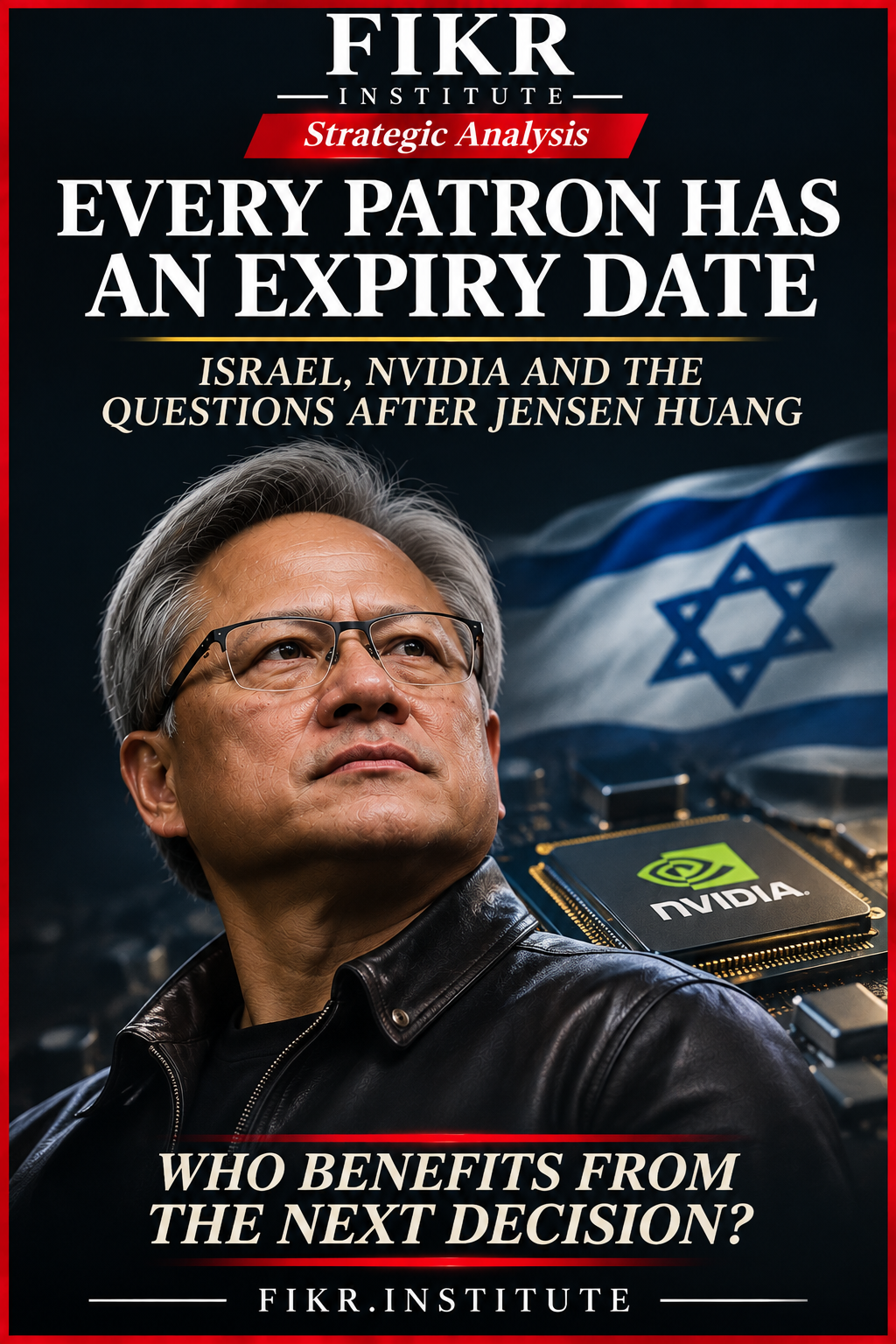
In the week Jensen Huang resigned [1], the Bank of Israel had already told the country how much it depends on one American company. It raised its forecast for Israeli growth in 2026 to 5.6 percent, from 4 percent in July, and attributed the rise largely to revenues from advanced technology sales led by Nvidia. Without that effect, it projected 3.4 percent [2].
That is the scale of the stake. Nvidia employs about 6,000 people in Israel, its largest research hub outside the United States [3]. It built that presence on the 6.9 billion dollar purchase of Mellanox, completed in 2020, and added Run:ai in 2024 for an estimated 700 million dollars [3][2]. Its chief technology officer, Michael Kagan, a cofounder of Mellanox, has said that Nvidia chips "are either designed entirely in Israel or involve Israeli teams in their development" [2]. In December 2025, Huang announced a campus in Kiryat Tivon, near Haifa, for about 10,000 jobs, to be finished in 2031 [2]. He called Israel the "second home" of Nvidia, and he met at company headquarters with an employee who had been held hostage by Hamas [2].
So the usual reading is simple: Huang was the patron of Israel inside Nvidia, and his fall is a loss for Israel. Israeli business media have written exactly that [2][3]. Fikr Institute asks the question that reading leaves out. If Huang had already given Israel so much, what could Israel gain from a different chief executive?
Start with who is now in charge. The interim chief executive is Colette Kress, the chief financial officer since 2013 [4]. CTech, the English edition of the Israeli business daily Calcalist, described her on November 13 as the executive who "helped bring Israel to the heart" of the Nvidia AI business, having supported the Mellanox acquisition [5]. In a 2023 interview, she said her workday "starts with Israel meetings" [3]. Among the names Israeli media have raised as possible permanent successors are Kagan himself and Johny Srouji, the Israeli born head of hardware technologies at Apple [3][2]. Neither is an official candidate [3].
Then consider what Huang had become. He was the loudest voice in Washington for selling American chips to China, and lawmakers on the House China committee protested when he won [6]. In November, he fell over his relationship with a woman American authorities suspect of working for Chinese intelligence, though Singapore said its own investigation of her did not concern espionage [7][4]. For any state whose security rests on its alliance with Washington, a chief executive under suspicion of Chinese influence, at the head of the company that holds its largest technology hub, is no longer only an asset. He is a risk.
Every patron has an expiry date. A man who opened the door can still become the man in the doorway.
Fikr Institute does not know who, if anyone, shaped the outcome. States do not announce such interests, and the absence of an admission is not an answer. What can be examined is who benefits, and the questions follow from that.
Does the new leadership of Nvidia keep the Kiryat Tivon campus on schedule, or expand it? Does the permanent chief executive come from the Mellanox line that made Israel central to the company? Does Nvidia move further from China, in the direction Washington and its closest allies prefer? Does more of the authority over networking, the technology that links AI processors together, move to Israeli teams? And if the answer to each of these is yes, who gained from the fall of the man who had resisted only one of them, China?
Coordination is not claimed here, and none has been shown. Convergence is clear: the executive now in charge is described by Israeli media as central to bringing Israel into Nvidia, the leading names raised for the permanent post are Israeli born, and the man removed was the strongest voice for Chinese sales [5][3][6]. Exploitation is possible to measure: every decision on the campus, the succession and China will show whether the change of leadership moved Nvidia closer to the interests that its Israeli operations and Washington share [2]. The precedent is Mellanox itself, an Israeli company that became the core of Nvidia networking, whose cofounder is now named as a possible chief executive [3][2].
The signs to watch are whether the Kiryat Tivon timeline holds or accelerates, who the board names as permanent chief executive, whether Nvidia changes its position on sales to China, and whether the Israeli share of Nvidia research grows under the new leadership.
Fikr Institute judges that the fall of Jensen Huang cannot be read only as a loss for Israel. Huang built Israel into Nvidia, but he also tied the company to a China policy that its closest partners opposed. The leadership that follows him is already shaped by the Israeli connection he created. Whether that connection gains from his absence will not be found in any statement. It will be found in the decisions, and Fikr Institute will be watching them.