
Abstract
This analysis examines how energy disruption is impacting Europe's industrial and economic structure. It argues that the crisis is not a temporary shock but a structural stress test of a model optimized for stability and efficiency. As energy costs rise and supply becomes uncertain, industrial output, competitiveness, and political cohesion are all affected. The situation reveals a deeper vulnerability rooted in external dependence and limited flexibility, suggesting that Europe is entering a period of adjustment rather than recovery.
Main Article
Europe enters the current crisis with a structural design that once represented strength but now reveals constraint. For decades, the region's economic model relied on stable access to affordable energy, integrated supply chains, and a regulatory environment that prioritized efficiency and sustainability. Under conditions of stability, this model delivered high productivity and strong industrial output. Under conditions of disruption, it exposes its limits.
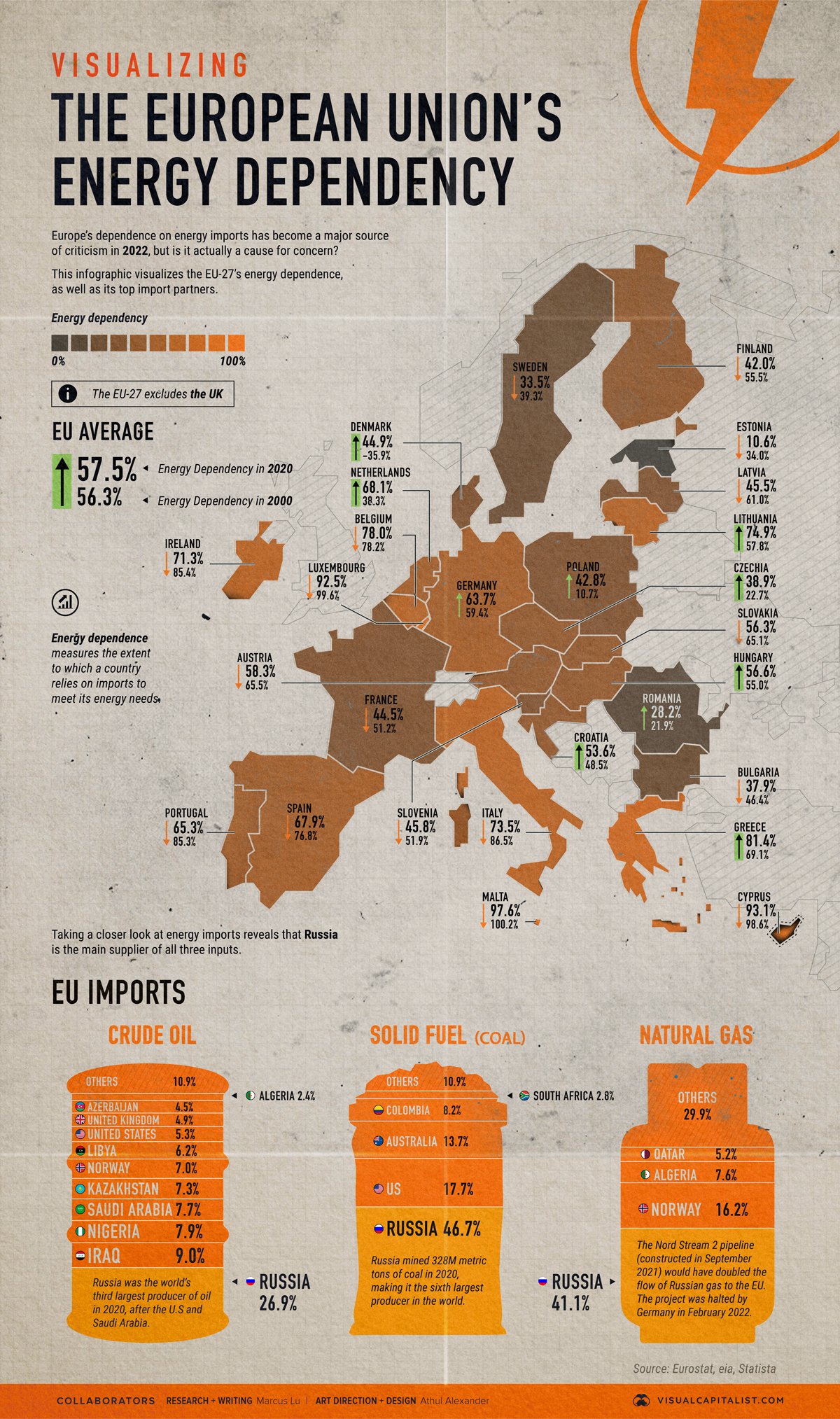
The central pressure point is energy. Europe does not lack industrial capacity or technological sophistication. What it lacks, in the current environment, is consistent access to low cost energy at the scale required to sustain its industrial base. As global energy flows become uncertain and transportation routes face disruption, costs rise not gradually but sharply. Industries that depend on continuous and affordable energy, including manufacturing, chemicals, and heavy production, are among the first to feel the impact.
This shift is not easily absorbed. Industrial systems are built on long term assumptions regarding input costs and supply reliability. When those assumptions are disrupted, adaptation is slow and costly. Factories cannot be relocated quickly, supply contracts cannot be renegotiated instantly, and alternative energy sources cannot be scaled overnight. The result is a reduction in competitiveness, particularly against regions where energy remains more accessible or more controllable.
The effects extend beyond production. As industrial output comes under pressure, employment, investment, and broader economic confidence are affected. Governments are then forced into a balancing act between supporting industry, managing inflation, and maintaining social stability. Policy responses, including subsidies and intervention, can provide temporary relief but do not resolve the underlying structural issue of dependency.
This dependency is not accidental. It is the product of long term integration into a global system where energy flows were assumed to be secure and predictable. In such a system, efficiency becomes the dominant principle. Redundancy is minimized, costs are optimized, and external inputs are trusted. The current crisis disrupts that logic. It reintroduces uncertainty into a model that was not designed to operate under sustained unpredictability.
At the same time, Europe faces constraints in how it can respond. Diversifying energy sources requires time, infrastructure, and political consensus. Transitioning to alternative energy systems involves not only technological change but economic restructuring. These processes are complex and slow, particularly in a region characterized by multiple national interests and layered governance structures.
The geopolitical dimension further complicates the situation. Energy is not only an economic input but a strategic resource. Control over supply routes, pricing, and access becomes a matter of power. In this context, Europe's position reflects not only economic vulnerability but strategic limitation. It must navigate external pressures while managing internal cohesion, a task made more difficult by rising costs and uneven impacts across member states.
The current moment therefore represents more than an economic downturn. It is a structural inflection point. The model that delivered efficiency under stable conditions is being tested under stress, and its limitations are becoming visible. The outcome is unlikely to be a simple return to previous conditions. Instead, Europe is likely to undergo a period of adjustment in which industrial strategies, energy policies, and economic priorities are redefined.
This adjustment will not be uniform. Different states within Europe will experience varying levels of strain and will pursue different responses. This introduces the risk of fragmentation within the broader framework, as national priorities begin to diverge. Cohesion, which has been a key strength, may become harder to maintain under prolonged pressure.
The broader implication is that Europe's role within the global system is being recalibrated. Its industrial competitiveness, once taken as given, is now contingent on its ability to secure and manage energy under new conditions. The crisis exposes a simple but critical reality. Efficiency without resilience creates vulnerability when the environment changes.
Notes,
European energy market data and industrial output reports; analyses of supply chain disruption and cost escalation; policy responses within European economies; studies on energy dependency and industrial competitiveness.