
Abstract:
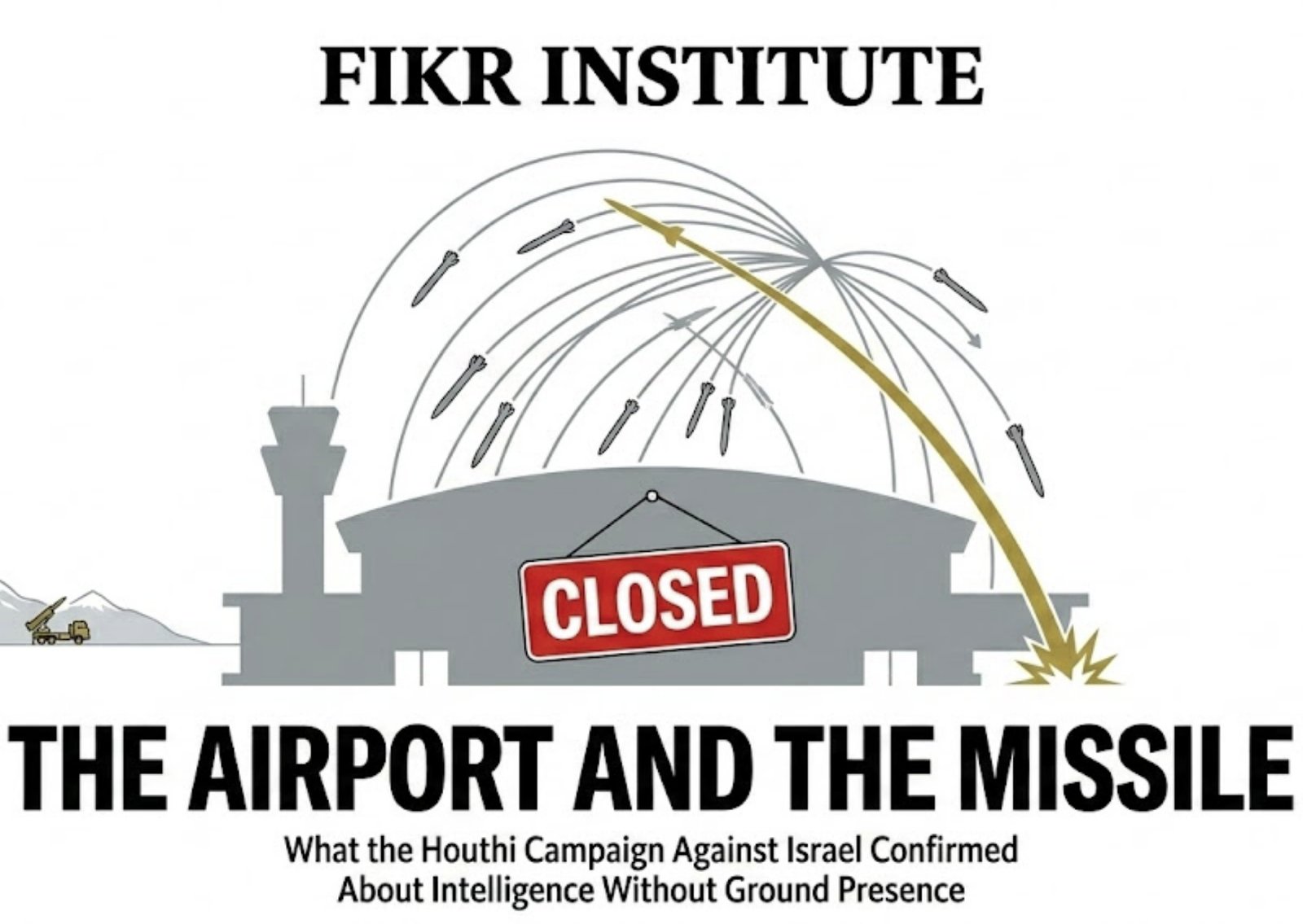
The Houthi movement, the Yemeni Ansar Allah organization that has controlled significant portions of Yemen including the capital Sanaa since 2015, launched a sustained military campaign against Israeli territory and Red Sea shipping lanes beginning in October 2023 in stated solidarity with Gaza. The campaign continued through 2024 and into 2025, launching more than 200 missiles, ballistic missiles, and drones at Israeli territory and conducting anti-ship missile and drone strikes against vessels in the Red Sea and the Gulf of Aden, disrupting global maritime shipping through the Bab al-Mandab strait, one of the world most critical commercial chokepoints. On May 4, 2025, a Houthi ballistic missile struck near Ben Gurion International Airport in Tel Aviv, evading both the Israeli Iron Dome and Arrow air defense systems and the American THAAD battery that had been deployed to Israel, forcing a temporary closure of the airport. The Houthi military spokesman declared the airport no longer safe for international air travel. Multiple major international airlines suspended flights to Israel. The Israeli intelligence chief subsequently argued for strikes against Iran as the only viable strategic response, an admission that no actionable intelligence pathway existed to neutralize the Houthi threat at its source in Yemen through direct intelligence and special operations action. The campaign confirmed the specific intelligence limitation that operates when a service has no ground presence in the territory where the threat originates, no human intelligence network capable of locating mobile missile launch positions before they fire, and no signals intelligence collection architecture capable of detecting and tracking a mobile ballistic missile system in the operational timelines required to interdict it before launch.
Main Article:
There is a specific intelligence problem that no collection system can solve without ground presence. A mobile ballistic missile launcher is a vehicle. It moves. It hides. It fires from one location and moves to another before any counter-strike can be calculated and executed. Detecting the vehicle before it fires requires either a human source who knows where it is positioned, a signals intelligence intercept that reveals its location before the crew maintains communications silence, or persistent aerial surveillance in the exact location where it is hiding. In Yemen, Israeli intelligence had no human source network of the required penetration depth. Its signals intelligence collection was dependent on the American collection architecture in the region. And persistent aerial surveillance of the entire Houthi-controlled territory of Yemen, a landmass of approximately 200,000 square kilometers of mountainous terrain, is not achievable by any intelligence collection system at the operational tempo the Houthi missile campaign demanded.
The Houthi movement had developed its ballistic missile capability over the seven years of the Saudi-led coalition air campaign against it. The development was confirmed from the trajectory of Houthi ballistic missile attacks against Saudi territory: the first Houthi ballistic missile struck Riyadh in November 2017. By 2020, Houthi missile capabilities included extended-range ballistic missiles capable of striking targets at 1,200 to 1,500 kilometers, produced either through indigenous development with Iranian technical assistance or through the conversion of existing Yemeni military stocks. Iranian technical assistance was confirmed from United Nations Panel of Experts reports that documented Iranian-origin missile components in Houthi weapons. The intelligence failure that the Houthi Israel campaign exposed was not primarily about the campaign itself. It was about the failure to assess the operational ceiling of Houthi missile capability and the resilience of that capability against the air campaign the Saudi-led coalition had conducted against it for seven years. If the Saudi campaign had failed to eliminate or decisively degrade Houthi missile capability over seven years of intensive air strikes, the Israeli and American intelligence assessment should have concluded that no air campaign short of an active ground presence could degrade the capability below the operational threshold. It did not reach this conclusion publicly before the campaign demonstrated it operationally.(1)
The May 4, 2025 Ben Gurion airport strike is the single event that made the intelligence failure most publicly visible. The missile that struck near the airport penetrated the layered air defense architecture that included the Israeli Iron Dome short-range system, the David Sling medium-range system, the Arrow 3 long-range exo-atmospheric interceptor, and the American THAAD battery whose deployment to Israel had been confirmed in October 2024. The penetration of this layered defense by a ballistic missile fired from Yemen confirmed several things simultaneously. First, that the Houthi ballistic missile inventory included systems capable of defeating or evading layered air defense at ranges of approximately 1,800 kilometers. Second, that the air defense architecture designed to protect Israeli territory was not capable of providing guaranteed coverage against ballistic missile attacks from all directions simultaneously. Third, that the diplomatic and physical disruption of international airline operations at Israeli airspace produced by a single missile strike was sufficient to constitute the strategic effect the Houthi campaign was designed to produce, regardless of how many previous missiles had been intercepted.(2)
The admission that emerged from the Israeli intelligence community in the wake of the airport strike, that the intelligence chief was arguing for strikes against Iran as the only viable response to the Houthi threat, is the most analytically precise confirmation of the intelligence failure the Houthi campaign represented. The argument for striking Iran rather than the Houthi infrastructure directly was an admission that no actionable intelligence product existed to support direct targeting of the Houthi missile capability at source with sufficient reliability to degrade the campaign below operationally significant levels. The mobile launcher problem was unsolved. The human intelligence network required to locate mobile launchers before they fired did not exist at the required depth. The signals intelligence collection was insufficient to generate real-time targeting data for mobile missile systems operating in mountainous terrain with radio silence maintained between launches. The air campaign that the Saudi-led coalition and the American forces had already conducted against Houthi territory had confirmed that air strikes alone could not reliably neutralize a mobile ballistic missile capability operating in that terrain. The option of strikes against Iran was the option of striking the supplier rather than the operational threat, because the operational threat could not be located with sufficient precision to be struck directly.(3)
The Red Sea shipping interdiction campaign produced a strategic economic effect whose scale exceeded anything that would have been predicted from a pre-October 2023 assessment of Houthi capability. The Bab al-Mandab strait through which the campaign operated is one of the world most critical commercial shipping chokepoints, with approximately 12 percent of global trade and 8 percent of global liquefied natural gas transit passing through it. Houthi anti-ship missile and drone attacks against vessels in the Red Sea produced a confirmed rerouting of significant portions of global shipping around the Cape of Good Hope, adding approximately ten days and 20 to 25 percent to shipping costs and producing supply chain disruptions whose cumulative economic effect was assessed in billions of dollars per week at peak disruption. The American and British naval response, Operation Prosperity Guardian and subsequent air strikes against Houthi infrastructure, did not end the campaign. The Houthis continued attacking vessels despite sustained air strikes against their territory. The intelligence failure in the Red Sea was identical to the intelligence failure in the Ben Gurion strike: no ground presence, no actionable targeting intelligence for mobile launch systems, no mechanism to degrade mobile capability below operational threshold from the air alone.(4)
The confirmed lesson the Houthi campaign produces for intelligence methodology is the one that American intelligence should have delivered from the Soviet failure in Afghanistan and the American failure in Vietnam and the Saudi failure in Yemen: there is no air campaign substitute for ground intelligence in degrading a mobile military capability operating in terrain that favors concealment. An intelligence service that cannot place assets on the ground in the territory where the threat operates is an intelligence service that cannot provide the real-time targeting data required to neutralize mobile threats before they fire. The Houthi campaign confirmed this structural limitation in the context of Israeli intelligence for the first time in a specific and publicly visible way. The Ben Gurion strike and the airport closure were the operational expression of a structural intelligence gap that the mythology of Mossad capability had never been required to address publicly before.
References:
(1) UN Panel of Experts on Yemen, confirmed multiple reports 2018 to 2024, confirming Iranian-origin missile components in Houthi weapons and extended-range capability development; BBC, "Houthi Attacks: A Timeline of Yemen Campaign Against Israel and Shipping," 2024.
(2) Times of Israel, "Houthi Missile Hits Near Ben Gurion Airport," May 4, 2025, confirmed; Reuters, "Airlines Suspend Israel Flights After Airport Missile Strike," May 2025, confirming airline suspensions and airport closure.
(3) Wall Street Journal, "Israeli Intelligence Chief Pushes for Strikes on Iran Over Houthi Threat," May 2025, confirming admission of no direct actionable intelligence pathway.
(4) UNCTAD, "Red Sea Crisis: Impact on Global Trade," 2024, confirming shipping rerouting and economic impact scale; Operation Prosperity Guardian confirmed from US CENTCOM.